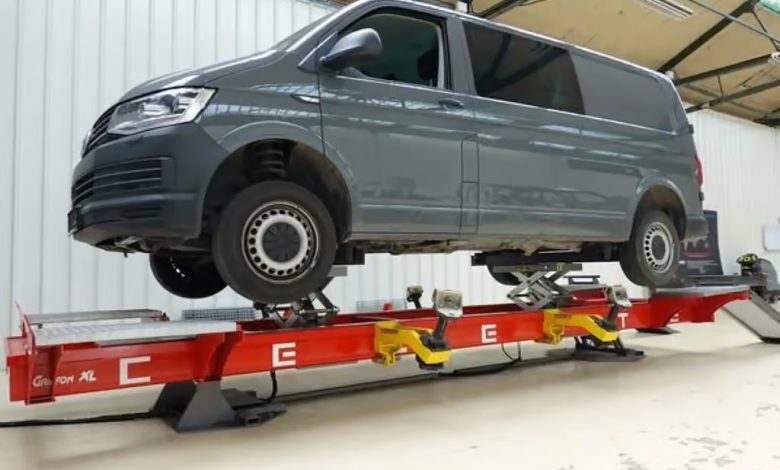
Vehicle loading can consume a surprising amount of repair time, especially when every job requires separate lifting and positioning equipment. A drive on bench with scissor lift can streamline preparation for suitable vehicles by combining straightforward access with adjustable working height.
Identify the Jobs That Benefit Most
Drive-on loading is especially useful when a vehicle can still roll or move under its own power.
Light and medium collision repairs may be positioned quickly without arranging a separate two-post lift. Initial inspection can begin soon after the vehicle enters the bay.
The bench can also support diagnostic and measuring work before the full repair plan is confirmed. Raising the vehicle allows technicians to inspect underbody damage and suspension mounting areas.
Severely damaged vehicles may still require winching, dollies or alternative handling. The workshop should not assume that drive-on capability removes the need for recovery equipment.
The value depends on the mix of work. High-volume shops handling many repairable vehicles may gain more than facilities focused mainly on major structural damage.
Design the Approach to Prevent Delays
A drive-on system needs a clear, straight route.
Ramps should have suitable angles for low vehicles, and there must be enough space for alignment before loading. Floor levels and drainage channels can affect how securely the ramps sit.
Technicians need visibility along both sides of the vehicle. Guides, mirrors or assistance from another person may be appropriate when clearance is limited.
Once loaded, the vehicle should be positioned accurately enough for anchoring and measuring without repeated adjustment.
The area in front of the bench must remain free from parked vehicles and parts storage. Drive-on convenience disappears when the approach becomes blocked during busy periods.
Use Adjustable Height Throughout the Repair
The scissor lift can support several stages of the job.
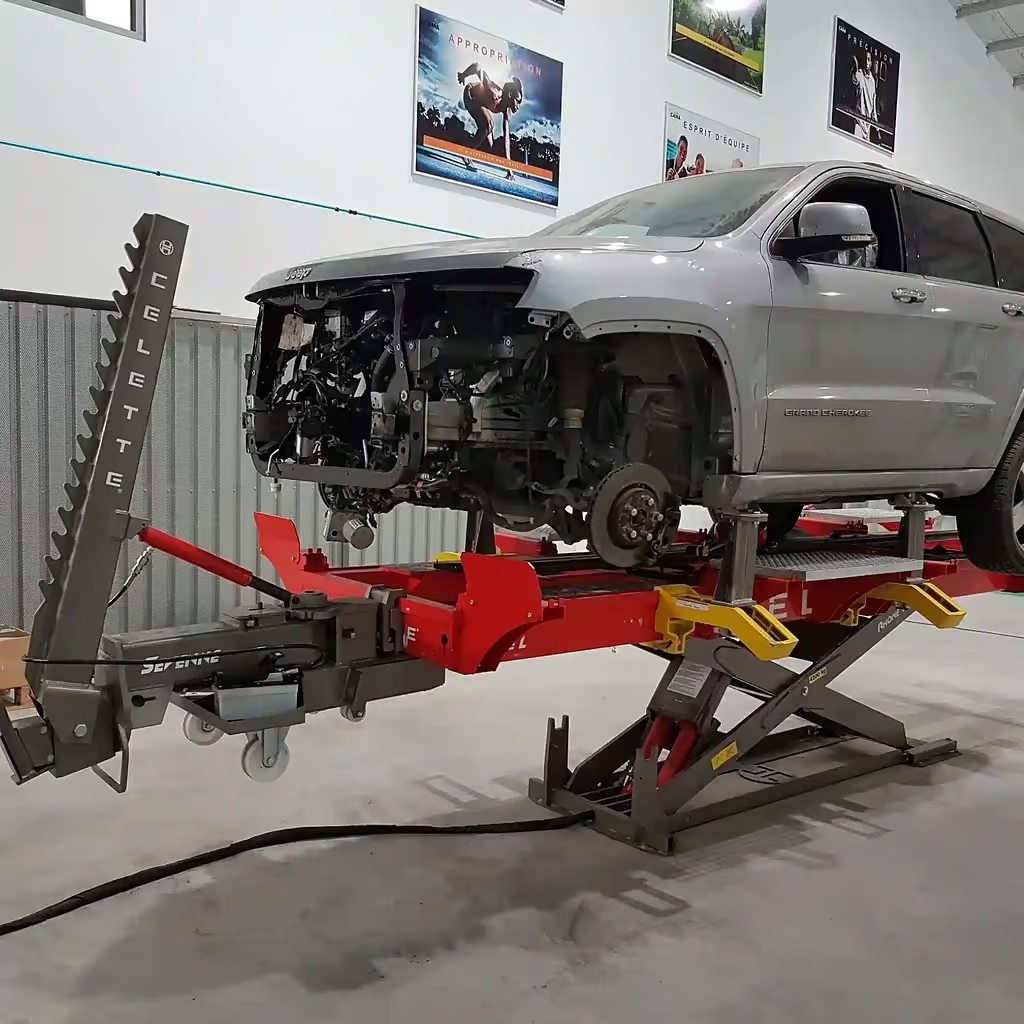
At a lower level, technicians may load, anchor and complete upper-body work. Raising the platform improves access to lower structural areas, suspension and underbody components.
Measuring can be completed at a height that suits the equipment and technician. Welding and preparation work may also become more comfortable.
The system’s rated capacity must cover the full vehicle range, including heavier electric and hybrid models. Battery location and approved lifting procedures should be considered before raising these vehicles.
Safety locks and clear operating procedures are essential whenever people work near or beneath the platform.
Measure Productivity Beyond Loading Time
The commercial benefit should be assessed across the whole repair. Faster loading is valuable, but the bench should also reduce transfers, improve access and support accurate work. Workshops can compare set-up time, repair hours and bay occupancy before and after introducing the system.
Technician feedback is useful because small layout problems may reduce the expected gain. Tool storage, control placement and ramp handling can often be improved after observing daily use.
Maintenance downtime should also be included. A productive machine must remain available and easy to service.
Drive-on loading works best as part of an organised repair bay. When the approach, lift operation and measuring process are aligned, the system can shorten preparation while giving technicians a more flexible platform for the work that follows.